Things to do

While Montpellier is relatively modest in size, this does not mean that there are limited things to see and occupy yourself with – this could not be further from the truth. From cultural activities to leisurely strolls on the beach to breathtaking excursions, there’s always something to distract you from everyday stress.

Musée Fabre

A minute’s walk from the main square you will find Musée Fabre. This beautiful museum hosts a great collection ranging from modern pieces to paintings of the esteemed European schools of the 16th-18th centuries. Attached to the museum you can find the stunning Restaurant L’insense, which provides a good lunch spot to rest those weary museum legs.

Jardin des plantes

The Jardin des plantes (botanical gardens) are a bliss setting to have a stroll and a think, or just peruse the many beautiful plant varieties on display. 2 minutes walk from the Porte de Peyrou, entry is free and open all year round. This is one for showing the folks the wonders of the city!

Parc du Peyrou

The park and promenade behind the Arc de Triomphe form a beautiful vantage point over the lower part of the city, with stunning views stretching for miles on a clear day. On a hot day during September/October or as the start of summer approaches, expect this place to be abuzz with wine drinkers, breakdancers, meditators and sometimes even passionate demonstrators. Many days were spent here with the Erasmus crowd having a few drinks on the grass and a kick about.

Pont du Diable

Arguably my favourite place I visited while in Montpellier was a beautiful bridge called Pont du Diable (Devil’s Bridge), accompanied by an enticing lake and old town situated around an hour’s bus ride outside of the city. My only regret was that I didn’t visit it earlier than when I finally made the trip in late May. If I could recommend one thing it would be to come here when the weather is warm and the sun is shining! After alighting from the bus we walked across the main centuries-old bridge into the small town of St. Jean de Fos, a beautiful little village set into the Languedoc countryside. After lunch was purchased, it was time to head down onto the pebble beach at the base of the bridge and fronted by the enticing blue lake. Spending the day sunbathing, drinking, swimming, playing aqua-rugby and topping it all off by cliff diving into the water was unquestionably one of the best days I had on my year abroad and the perfect way to round off my stay in the south of France.
Social life

The social side of life in Montpellier was one of the aspects I enjoyed the most. Not only was this thanks to the multitude of nightlife options on offer, but also the melting pot of many Erasmus students with which I became lifelong friends.

In terms of clubs and bars to explore, while Montpellier may not match up to the high standards of a medium size UK city such as Nottingham, there are certainly plenty of options. First of all is the plethora of bars in the centre which stay open relatively late, some of which offer happy hours. A favourite of mine and my friends was the tapas bar Les Coulisses, which can be found on a side street around 2 mins walk from the Place de la Comédie. The atmosphere is always bouncing, and they offer 2 euro pints between 8-9pm so it’s always a reliable option for those pre-drinking occasions! An honourable mention goes to Comptoir de L’Arc, situated in a quaint square off the promenade leading to the Porte du Peyrou (Montpellier’s Arc de Triomphe). This place also offers a happy hour up until 11pm with mainly outdoor seating, so make sure to wrap up warm in the autumn and winter months!

Now as clubs go, Montpellier holds its own as a solid clubbing destination – it all depends what you’re into.

For the weeknight mixed-music club scene, look no further than L’Antirouille, 10 minutes walk away from Place de la Comédie. It’s safe to say this place saw more of our group’s faces than any of our family did in a year. Thursday nights are the time to attend this shabby but hip venue, which offers free entry and relatively cheap drinks – I recommend embracing the French way of life in the form of endless glasses of Rosé. Music-wise, the DJs can be heard playing everything from hip hop to house to RnB and everything in between. The venue also hosts ticketed events from big name DJs, which are never a disappointment.

Other venues for more chart music-oriented nights include Panama and Cargo which, while not personally my type of thing, still ensure a fun night.

For the serious electronic/house/techno fans there is the huge warehouse venue of Dièze. This massive empty depot-type building takes the hairs off your head when the soundsystem is in full force, which is every time they welcome ravers through its doors. A highlight of the year for me was definitely coming here in November to see Sonja Moonear and Traumer as part of Festival Dernier Cri. The sets would have been immense at any other venue but taking place in the towering walls of Dièze’s the main room elevated them to incredible levels.

Another standout establishment for thumping dancefloor nights is Rockstore, found 3 minutes walk down from Comédie. This humble club may not compare to Dièze in terms of size, but it guarantees a quality boogie. I saw two of my favourite artists here: French DJ Folamour who showered us in blissful disco and smooth house and KoKoKo! – a five piece collective from Kinshasa, DRC who purvey raw, energetic music with their DIY-made instruments.

Marseille

Early November saw me and two friends from my course visit Marseille, which would be the first of a host of travels I would take throughout the year. It’s safe to say to we got the most out of the city by visiting a fair few of its popular attractions. I’d highly recommend any students based in the south to pay it a visit.

Upon arrival, we sampled some local cuisine in the form of Burger King – which truly hit the spot. The energy was much needed as we were about to set off on a pilgrimage to the Basilique Notre Dame de la Garde, a church which sits atop a hill overlooking the city. Around 2 hours after disembarking from the metro and feeling the lactic acid burn of the uphill climb, we finally arrived at the summit. I had visited before in 2015, but you forget how breathtaking the panoramic views truly are. The weather was kind, giving us bright blue skies which allowed for a view which stretched for miles. After our jaunt to the basilica we ventured down to the docks and found a waterside restaurant, whose mussels and fries were delectable. Following the meal we nourished ourselves with a cold pint and headed back to the train station through a district awash with colourful murals. The perfect way to round off a brilliant day.

Travel and transport in Montpellier

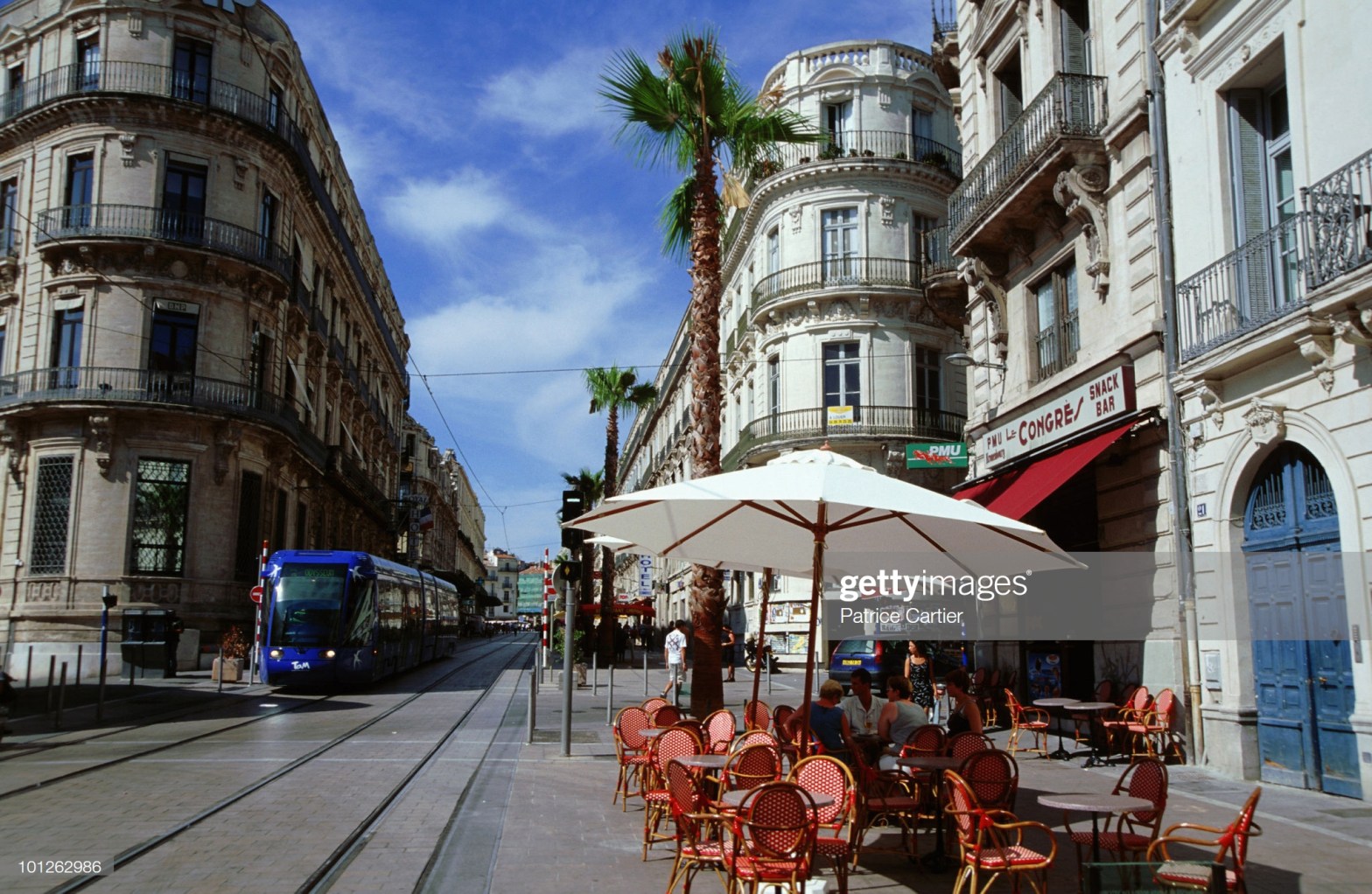
Montpellier is very much like any other city when it comes to transport in that the main source of transport for the public is the bus or the tram. Both of these services are ran by a company called TaM and provide frequent services every day.

For my usual commute into university and into the city centre, I used the tram. It was extremely easy, not too expensive and there was a stop right outside my university accommodation which was very handy. The tram in Montpellier has 4 lines and goes to each major district of the city, so depending on where I was headed I was able to get transport directly to the place or a short walk away from it. The only downside to the tram was the sparse timetable in the later hours – the majority of my friends and I lived in university accommodation so this affected us after nights out. As our accommodation was situated 15 minutes by tram or an hour’s walk away from the centre, it was imperative we caught the last tram which left Comédie (the main stop in the centre) around 1am. If we missed it we would have to wait until the first one the next morning at around 5am! It was manageable though and I would have preferred to wait until then than order an Uber as they were extortionate and often quite unreliable.

As for the bus, I only used it twice. The first was in my first week in Montpellier when Erasmus ran their own pool party quite far out the city so a bus was arranged to take the students. They piled about 150 of us onto a bus that should have only taken about 70 people so that was an experience to say the least. The second time using the bus was to get to the beach at Palavas-Les-Flots which served as a connect between the end tram stop and the main promenade. Even though it was around a 35 minute walk between the two, the irregularity of the bus meant making the trek by foot became the norm.

In Montpellier there’s also a bike service called Vélomagg which is essentially a bike sharing scheme that allows you to ride and park throughout the city. There was bike stations on many streets, often near the tram or bus stop to make them easily accessible for the public. I used this bike service once when my family came to visit and I couldn’t recommend it more enthusiastically. We cycled to the coast along the main route through Lattes which was incredibly picturesque and really easy to follow – I don’t think I would have coped having to cycle on the other side of the road! Along the way we lucked out in passing a ‘flamboyance’ of flamingos, a sighting which we were told was rare at that time of year (October). Seeing them was a pleasant surprise as it’s not the first thing you expect to experience when you come to study / go on holiday to a city in the south of France. You needed to give a deposit for the bike along with around 50 cents an hour while using it, which you pay at the end when you park again. On the whole the bikes are something I really recommend; however, try and avoid damaging them as I remember the fine was around €250 – not ideal when you’re a poor student!

My only other form of transport in France was by plane, which I used to get there in the first place. Montpellier has an airport in the city but it wasn’t ideal for me as the airports near me in England didn’t fly there. However, there are are many other airports relatively nearby such as Carcassonne, Béziers, Nîmes and Marseille which are all around an hour away depending on the mode of transport. When I travelled I mostly used the train to get to the airport and Gare St Roch provided a good service to all these destinations which was extremely useful. 

The only issue I had with transport was on my way back to England at Christmas when I and two others ended up missing our flight, which as one can imagine did not go down well with the parents or do wonders for the bank account. The most frustrating thing about it was that we had made it to the airport in time and used a BlaBlaCar (a carpooling service for medium to long distances) to get from Montpellier to Carcassonne which gave us plenty time before our flight. Despite our efforts, we were just too relaxed (and probably too excited to get home for Christmas) and didn’t take the initiative to check in on time when we actually arrived at the airport. Looking back it was extremely stupid and entirely our own fault, which makes the situation worse, but in the end we made it back to England… it just took longer than expected.

So on the whole, transport in Montpellier is more than satisfactory. There are many ways to get around the city and every mode was mostly convenient provided you planned head. I would tell anyone going to make use of the tram as looking back it really did make everything a lot easier and didn’t break the bank too much!

Design a site like this with WordPress.com
Get started